In
Bewildering Move Australia's .AU Domain Administrator
(AuDA) Decapitates Its Own .com.au SLD
If it
wasn't September I would have thought the headline
I saw at Domainer.com.au Monday was an
April Fool's joke. It said auDA Board Just Voted to Destroy the
.com.au Name Space - but it was no
joke. AuDA,
the administrator of Australia'a.au
top level domain and parent of second level
versions like .com.au, .net.au and .org.au
- decided to stab their loyal .com.au and .net.au customers in
the back by passing a rule that will make it too
expensive for hundreds of thousands of domain
owners to renew their names.
AuDA
did this by passing a rule saying registrants of .com.au
and .net.au domains will have to
have a trademark or company name matching
the domain they held in order to keep them. With
the cost of getting a new business registration or
trademark and maintaining it running into four
figures many will lose names they bought in good
faith years ago thanks to AuDA's decision to
change the rules in the middle of the game (a
change that, not surprisingly, will make the government
a ton of new revenue at the expense of Australia's
small business community).
David
Warmuz, CEO of Melbourne-based tech
powerhouse, Trillion.com
(parent of Above.com, Help.com and other well-known
Internet brands), wrote, " over 1 million .com.au
domains will require a new Business Name Registration or a new Trademark registration and then Change of Registrant done. We estimate that this is going to cost Small Business owners
$500 million to fix and a good $200 million every year to
maintain. This is a great win for the Australian Government through ASIC and IP Australia services, but
all at the cost of Small Businesses."
It
is quite odd that the new rule applies only to
the .com.au and .net au flavors of Australian domains -
not .org.au or even the top level marquee
domain - .au (a direct option that only
opened to the public for the first time in 2022).
Only the two that
business people counted on are affected in an inexplicable move that instantly
makes them toxic SLDs.
One
veteran Aussie domain investor/developer, Ned
O'Meara, wondered if this was a calculated
plan meant to drive up .au sales that,
with about 800,000 registered domains, are
dwarfed by the 3.3 million registered in .com.au.
The issue with that now is how could anyone
trust AuDA not to eventually pull the same
bait and switch on .au holders thatthey
have on com.au and net.au registrants? The one thing they
have succeeded in doing with this move is
taint the entirety of one of the world's great
country code TLDs.
The
mistake is so monumental, we would guess that
between now and when the rule gets implemented, AuDA is going to face an enormous
amount of blowback from the business
community and a variety of legal challenges
that may stop the madness before the damage is
irreversible.
"Trust
takes years to build, seconds to
break, and forever to repair." - Dhar
Mann
.Chess
Domains Are Coming with Community Application from
FIDE/World Chess Partnership Holding Dominant
Board Position
Chess
fans around the world can expect to see the
wildly popular 1500-year-old game's online profile
elevated, thanks to the ICANN's 2026 round
of new gTLDs. Now that the application window has
closed, we are learning more about what new top
level domains were applied for and who is seeking
to operate them. The latest to step forward is a
powerhouse partnership between the International
Chess Federation (FIDE) and
commercial partner, World
Chess, that applied for the .chess
TLD. FIDE represents more than 200 national
chess federations, giving them the credibility
needed to file a community application - a class
that is given preference when more than one party
applies for a TLD (at the moment no other
applicant for .chess has been revealed).
FIDE's
commercial partner, World Chess,
develops online chess platforms, professional
tournaments and chess products for players
worldwide. With an estimated 600 million
chess players around the globe and a fan base
exceeding one billion, there is a
substantial market to serve. In a press
release about their application,
World Chess detailed the partnership's plans,
noting "National federations will receive dedicated .chess domains, allocated in coordination with FIDE — a common,
recognizable internet identifier system for organized chess in every country. Clubs, academies,
organizers, platforms, media and players will be able to register names that instantly say what they are:
a string built for the game, backed by the institution that has governed it since 1924, and operated by World Chess.
FIDE
and World Chess have also chosen a technical
partner to provide back-end services for
.chess, ICANN Regsistered Service Provider .it.com
Domains (a company that already
operates its own .it.com namespace with over
150,000 active domains). .it.com Domains
already had a successful working relationship
with World Chess. In 2023 they entered a
three-year partnership agreement under which .it.com
Domains sponsored World's Chess's Armageddon
Chess Series.
Acting FIDE
President Viswanathan Anand said. “Chess deserves its own place on the internet — one where a player, a parent or a sponsor can see at a glance that a domain is genuinely part of the game.
.chess will give our federations and our community a shared, trusted home online, and I am glad that FIDE is anchoring it together with World Chess.”
Registered
Agents Takes a Two-Pronged Approach to New TLDs -
Running Their Own and Providing Back-End Services
to the Rest
Over
1,600 applications to run new Top Level
Domains were filed with ICANN in the recently
concluded 2026 round (the first chance to create
new domain extensions since 2012). The impending
flood of new TLDs not only creates opportunities
for entrepreneurs to operate entire TLDs of their
own, it creates opportunities for companies that
provide the back-end services needed by all
of those new registry operators to function. There
are also companies taking advantage of both
opportunities at the same time. We saw that
today when Registered
Agents Inc. (RAI) announced they have
applied to run six new TLDs and are also
diving into the registry services business with an
all-new, built from scratch infrastructure,
designed to give gTLD operators and ccTLD
operators more choice for the technology behind
their domains. That entity has been dubbed Astronym
Registry™.
Christopher
Ambler
RAI Director of Domain Registry
Astronym is the brainchild of Christopher
Ambler, one of those longest tenured
veterans in the entire industry with a career
dating back to the late 1980s. Christopher has
worked for Microsoft, Enom and GoDaddy
and is current Director of Domain Registry at
Registered Agents Inc. He moved from GoDaddy
to RAI in 2022 with the goal of building
"a new kind of registry, not
driven by investor control, but focused on
independence and quality - one designed to be
an alternative for TLD operators, registrars
and sovereign registries not wanting to use
publicly-traded companies or investor-owned
registry infrastructure solutions."
Ambler added, "Astronym is
independent, modern and designed to give
operators more control over the technology
powering their domains.”
As for their new TLD plans, the company applied for
.epic, .identity, .mark,
.private, .registeredagent and .verified. .Epic
is an apparent nod to the Epik domain
registrar that RAI acquired in 2022 after it
ran aground following financial malfeasance
under previous ownership. Even so, they aren't
the only party that has applied for the .epic
extension.
Ambler said, "Registered Agents Inc wants to promote
the TLDs to our six million-plus customers who care about independence
from Big Tech. Big Data. And Big Corporate. With a larger business-to-business customer base than GoDaddy, the company is uniquely positioned to bring better TLDs to the business world than any other registry operator.
We’re not building Astronym to only run six
domains, we’re building the infrastructure for a much bigger registry
business. We are actively pursuing partnerships with registry operators and also exploring opportunities to acquire existing registries from owners looking for an exit."
With
a Record of Success Running New Top Level Domains
Radix is Back for Round 2 With Their Sights Set on
Winning Dozens of New TLDs
Applicants
seeking to run their own new TLDs continue
to step forward and reveal the domain extensions
they applied for in ICANN's 2026 round -
the first opportunity to do so since the first
round was held 14 years ago. Radix
was active in that last round, landing multiple
TLDs including .tech, .online
and .website, to name a few. They've also
been one of the most successful operators of TLDs
that were added to the Internet in that 2012
round, so it is no surprise to learn they were
even busier in the 2026 round. They wound up
filing applications to run 46 additional
new TLDs, labeling the new initiative as Radix
Deux. They've also created a special website
to track developments in the new campaign at deux.radix.website.
Underscoring
how highly Radix is prioritizing this opportunity is
the fact that it is the company’s largest
strategic commitmentsince its founding.
The company began with more than 3.2 million words
and terms, analyzed over 1.8 million real-world
business and brand names for naming patterns,
evaluated more than 110,000 strings against
quantitative criteria, and scrutinized 580 finalist
strings individually; combining predictive modeling
built on a decade of Radix’s own registry data
with the judgment of the team that built its
existing portfolio.
The
46 applications are organized into seven
categories, each built around a distinct thesis:
AI (TLDs applied for listed on the first line
in the graphic below), for the machine-intelligence
era; Technology (line 2), for the layers
everything runs on; Bio & Health (line
3), for care, treatment, and the life sciences; Finance
(line 4), for money’s migration into software; Business
(line 5), for the language of commerce and work; Creator
(line 6), for the people who make things; and Culture
(line 7) for taste, belonging, and shared spaces.
Sandeep
Ramchandani
Radix CEO
Radix
CEO Sandeep Ramchandani said, “There
are two ways to approach a TLD round like this:
apply wide and see what sticks, or pick
deliberately and commit completely. We chose
the latter. We narrowed 3.2 million
possibilities down to 46, and every
string that made it is one we intend to operate;
there are no hedges on this list. We have spent
over a decade demonstrating what happens when
Radix commits to a string; our existing TLDs,
such as .tech, .store, and .online, have grown
into some of the most popular TLD brands under
the same team. Radix led this industry through
its first generation of new domains. We are
ready to lead the second.”
Of
course, in many cases there will be applicants
hoping to run the same TLD, so there is still a
long way to god before we will know who ends up
winning the various TLDs. Sandeep addressed that
in a LinkedIn post today, writing "How many
of these 46 we'll ultimately operate, nobody
knows — that's the nature of the process. But the
conviction behind each application is real.
Radix's current TLD brands include .tech, .online,.store,
.site, .space, .fun, .website, .press, .host,
and .uno and span approximately 10 million
domains under management, distributed
through hundreds of registrars and partners
worldwide."
Fans
of Armenia's .AM TLD Have Their Party Hats on This
Month As .AM Reached a New Registration Milestone
and Celebrated Its 32nd Anniversary
While .com
is the undisputed King of the Hill, anyone who has
had a chance to enjoy a bit of international
traveling knows that in many places you will see a
nation's country code top level domain (ccTLD)
just about everywhere you turn. As a country's
Internet address, the ccTLD is both an important global
brand and a point of national pride. That has been
the case with Armenia's .am ccTLD that is
administered by The Internet Society NGO (ISOC.AM).
August
has given .am fans a couple of big reasons to
celebrate. It started August 14, 2026 when the
ccTLD hit a new high water mark of 50,000
registrations, then on Wednesday of this week
(August 26), .am broke out the confetti to mark its 32nd
anniversary.
Above
& Below: ISOC.AM leaders and supporters
at the organization's office in Yerevan
Wednesday (August 26) to celebrate the 32nd
anniversary for .AM and recognize the person who
registered the 50,000th .AM domain on August
14. That was Vahe Danelyan who unknowingly
hit the mark by registering Armenia-Tour.am at
ABC Domain (internet.am).
Vahe was unable to attend in person but his name and
domain will now be part of .AM history.
A
statement from ISOC.AM about the occasion noted,
"An essential part of this journey is the
growing community of individuals and organizations
using a .am domain. By choosing .am, you are not
only establishing your own digital presence, but
also contributing to the growth of Armenia’s
digital ecosystem and strengthening our
country’s presence in the global domain market."
Every
nation on earth has its own country code top level
domain and each ccTLD has a unique history of
its own. I've had a little extra interest in
Armenia's Internet journey because of a family
connection. My brother-in-law, retired U.S. Army Brig.
General Peter Injasoulian has deep Armenian
roots. Peter's grandfather, Harry, emigrated from
Armenia to Racine, Wisconsin in the U.S. in the
early 1900s. Harry's son's George (Peter's
dad) was born in Racine and became a Colonel in the
National Guard. Peter took the family's military
tradition even further as a General officer and
former Commander of the Michigan National Guard.
Peter's kids were U.S. Army officers too! That's a
more than century long run of service to America
thanks to Harry's arrival here from Armenia all
those years ago!
How
Sedo's Mark Ghoriafi Managed to Close Two
Previously
Unreleased 6-Figure Sales While Vacationing in the
Alaskan Wilderness This Month
Now that
summer is winding down, we're hearing about what a lot of our friends did on their
summer vacation. There were trips to the
beach or a theme park, perhaps hiking, camping or
just a comfortable staycation away from the
crowds. What you don't hear a lot about are
seaplane expeditions, hiking across glaciers in
the Alaskan wilderness and encounters with wild
bears. I know - before I say another word - that a
lot of people right now are saying - he must be
talking about Sedo's
Senior Premium Broker, Mark Ghoriafi - and they would be right.
While
Mark's boundary breaking travel adventures have always
been eye-catching, it is amazing to see how much
work he manages to get done during his
"breaks". On a vacation trip to Alaska
this month he negotiated and closed two previously
unreported six-figure sales being revealed
here for the first time. One, of those, closed
from a remote mountainside, was H2.com at $240,000
in the 3rd highest 2-character letter/number sale
on record. The other was a .ai gem - School.ai at
$105,000.
The H2.com transaction unfolded the most
unexpected way you could imagine. Mark was
Mark
"Mr. Premium" Ghoriafi hiking across a
mountain
glacier in Alaska earlier this month. Sedo's
Senior Premium Broker closed two 6-figure sales while in the
middle
of this wilderness "vacation".
thousands
of feet up a mountain, watching bears catch
salmon at a waterfall, when he finalized the
agreement. By the time he reached the base, the deal
was funded. The only bigger letter/number domain
sales, regardless of extension, have been A1.com at
$260,250 and C4.com at $265,000 - and guess who
closed that last one - yep, C4 was Mark's sale
too (this past January).
We will be charting the H2.com and School.ai sales
when our next bi-weekly domain sales report comes
out Wednesday evening (August 26).
Sedo CEO Arthur Mai noted, "Mark is a great example of what makes
Sedo's brokerage team special. We have brokers
who bring real expertise, real relationships, and a
genuine drive to get the right deal done – for
buyers and sellers alike. Mark is one of them, but
he's far from alone." It's true, having covered
Sedo for the past 25 years, it has been remarkable to
see how many top tier brokers, past and present,
have carried the Sedo flag along the way.
They say a picture is worth a thousand words, so
that obviously means a video is even better.
Check out this clip from Sedo to see a lot more of Mark's trek across the
splendorous Pacific Northwest and Alaska:
NamesCon
Global 2026 Update: The AI Focused Preliminary
Agenda Is Out and Ticket Prices are Going Up
Friday Night
The 2026
NamesCon Global conference in Miami
is coming up fast. If you plan on
attending the big event at the Ice Palace
in Miami November 11 & 12, now is the
time to finalize your travel plans, secure a room
at the show hotel - the Marriott
Biscayne Bay - and get the best ticket
price. If the latter is important to you, register
ASAP because prices will be going up
Friday night (August 21) at the stroke of
midnight. Be sure to use the DNJournal promo code
- DNJ20 - at checkout to knock another
20% off the price (on a standard pass you will
save $129.80).
The
preliminary NamesCon Global 2026 agenda
is now online so you can get a much more detailed
look at what the conference organizers have in
store for you. As you would expect, AI
will be the center
of attention,
starting with the very first session - Building What Comes Next: The Internet Economy in the Age of AI
- in which NamesCon CEO Christian Jaeger,
Managing Director Anthony Pombal, Chairman of
the Advisory Board Soeren von Varchmin and
Chief Evangelist Christian Dawson will set
the stage for everything that will follow.
The
latest preview NamesCon distributed noted, "As
AI reshapes how people find, hold, and trust things online,
ownership itself is being redefined. Domains are no longer just addresses, they’re increasingly becoming part of conversations about digital identity, trust, ownership, and long-term value creation.
Together, these sessions explore how the domain industry is reinventing itself
for the next generation of the Internet, not simply reflecting on the last one.
See the program and start building your NamesCon Global agenda."
I
will, or course, be in Miami, both to cover the
conference for you and to participate on stage, most
notably in the highly anticipated show closing
session on November 12 - The Beanstalk Challenge Finale: Building Something Real
- in which I'll sit down with Beanstalk
Challenge Founder & Creator Rick
Schwartz to review the ground breaking project that will come to
an exciting conclusion that day in Miami.
Brothers
in Arms: John Alagna's Million Dollar Decision to
Apply for Multiple New TLDs Was Easier to Make
With a Key Family Member in His Corner
In my
last couple of posts, I covered the opposite
ends of the spectrum regarding the number of
applications that were filed to to run new top
level domains (TLDs) - and who filed them
before ICANN's window for applications closed last
week. Over 1600 submissions came in with the
largest block of them - more than 300 - come from the
newly formed Link Freedom Group. As a
counterpoint to that story we covered USA
Made In America Inc.'s application for a single
TLD - .factory - the same
strategy that the new company's co-founder, Colin
Campbell, used to get .CLUB in the last
round of new TLDS back in 2012.
To wrap
up the theme, today we have an example of an
applicant that, like the majority, followed a
middle path, marshaling resources to go after
a limited number of domain extensions that were
appealing to them. Since it cost $227,000
just to file each new TLD application, you
can see why it was wise to carefully consider the
prospects for every TLD on your want list before
taking the application leap.
Despite
the heavy price tag, it seems to some like everybody
and his brother had applied to run new TLDs.
Well, it wasn't everybody but a well-known somebody
was enlisted by his brother to help guide
his entrance into the domain race. That somebody
was industry veteranJoe
Alagna, the Chief Strategy Officer at .it
.com Domains, who literally wrote the
book - How
to Get Your Own Top Level Domain -
with co-author Andrey
Insarov. Joe's expertise came in very
handy when his brother, serial entrepreneur John
Alagna, saw running his own TLDs as an
opportunity that was too good miss.
Joe
Alagna
John
Alagna
Founder, TLD1 LLC
To
make it happen, John started a new company, TLD1
LLC and, with Joe as his
adviser, applied for two new generic
top-level domains: .bewell and .etc
and chose two others - .joinus, and .whatsnew
as replacement strings (If their first
choices are contested by other applicants
ICANN gives applicants a short window to
switch to their chosen replacement strings).
While
John is new to the domain business he is no
stranger to building successful companies,
having scored big wins across the retail, web services, and insurance
industries. His most recent exit was Carolina
Heritage Insurance, a Hilton Head
Island, Carolina brokerage that he grew into
one of the leading independent brokerages on
the East Coast before selling it to Relation
Insurance Services, a top-25 national
brokerage, in 2024.
John noted, "The internet has about six
billion users, but fewer than 200 million of
them actually create, publish, or sell
online. That gap is going to close,
and every new creator will needan
address they own. We applied for names
that are positive, useful, and open to
everyone. Each will operate as an open TLD,
available to all registrants through ICANN-accredited
registrars, with accessible first-year
pricing and active DNS abuse
prevention."
While there is still a long way to go before
ICANN chooses winning applications - including the
possibility of having to compete with other
applicants for the same TLDs - John has
already contracted .it.com Domains, one of the
first ICANN-evaluated registry service providers,
as its back-end registry operator.
Joe, who has more than 25 years of experience in
the domain industry, said, “I worked with dozens
of successful applicants in the 2012 round. The
plan here is the one that works: good
strings, proven infrastructure, and honest
pricing.”
The
2026 Round of New gTLDs Has Pulled Colin Campbell
Back Into the Domain Game with a New Company and a
Singular Focus on .Factory
In 2012,
ICANN radically changed the Internet
landscape when it opened the door to over a
thousand new top level domains. One of those went
to serial entrepreneur Colin Campbell who
focused all of his efforts on getting just ONE new
extension - .CLUB. That single minded focus
and never ending marketing blitz made .CLUB
successful enough to get GoDaddy's
attention in 2021 when they acquired the .CLUB
registry. Colin continued with his many
other ventures and also authored a best selling
business book - Start.Scale.Exit.Repeat.
Fast
forward to ICANN's long-awaited 2nd round
of new gTLDs - the first opportunity on 14
years to create a new domain extension. The
window for applicants to apply closed earlier this
week with 1,600 submissions, including more
than 300 from a
single entity, Link Feedom Group
(LFG). This new round also pulled Colin back
into the domain game with an entirely
different strategy than LFG is pursuing. Once
again, Colin is interested in just ONE new
TLD.
This
time it is .factory - a quest that prompted
him to team up with long-tine colleague and highly
respected industry veteran Michele
Van Tilborg to create a new company - USA
Made in America Inc. - the official applicant
for .factory.
Colin and Michele believe .factory has the potential to become a valuable
global digital asset serving manufacturers,
technology companies, entrepreneurs, brands and
businesses across a wide range of industries.
While the word “factory” traditionally
refers to a place where physical goods are
manufactured or produced, USA Made in America
believes its commercial potential extends wellbeyond traditional manufacturing into
technology, software, artificial intelligence,
media, design and other areas where products,
ideas and services are created.
Colin
said, “We strongly believe that this gTLD will be a
great asset to America. The Internet has
created entirely new categories of digital real
estate, and strong generic words can become
valuable infrastructure. We believe .factory has
the qualities we look for in a top-level domain:
it is short, memorable, globally understood and
commercially relevant across many industries.”
Michele, who also serves as President of the new
company, added, “Businesses around the world
want domain names that actually mean something
to their customers. We believe .factory can give
companies a new opportunity to secure a
meaningful, memorable identity that reflects what
they make, build or create, whether that happens
in a physical facility or entirely through
technology.”
Now, Colin and Michele are well aware that if more
than one qualified applicant seeks the same or
a conflicting string, the applicants may
ultimately need to resolve the contention through settlement
or an auction process. As a result, USA Made
in America has established a financing strategy
that contemplates raising up to $10 million
through a private securities offering conducted in
reliance on Rule 506(b) of
Colin
Campbell Co-Founder,
USA Made In America Inc.
Michele
Van Tilborg
Co-Founder & President
USA Made In America Inc.
Regulation D. The financing is intended to provide the
company with additional capital, if required, to
pursue .factory through a potential
contention-resolution process or auction and to
support related registry development and operating
requirements. The financing is contingency capital
and may not be required if .factory is not contested
or if contention is resolved without an
auction.
Colin has been through this already. When he
founded .Club Domains LLC in 2012 the .club string was contested by multiple applicants. His
company ultimately secured the rights to operate the
TLD through a private auction used to resolve
the contention set. If his new company completes
their mission to win, .factory it will be operated as
an open generic top-level domain available
through ICANN-accredited registrars.
There is still a long road ahead before
any of the 2026 new gTLD applicants will go live on
the Internet. Later this year ICANN will reveal
strings, begin initial evaluation of applicants and
open a formal objection period. Next year (and
likely a year or two beyond) the process will
continue with contention resolution, string similarity reviews,
contracting and final delegation.
Link
Freedom Group Goes All In on New gTLDs - Company
Filed Over 300 Submissions Before ICANN's New gTLD
Application Window Closed Wednesday Night
For the
first time in 14 years, ICANN
has started the process of creating hundreds
of new Top Level Domains. After opening in
April, the window to submit applications to run
newly created TLDs closed last night
(August 12, 2026). While it will be a couple or
more months before ICANN reveals exactly what
strings were applied for and who applied to run
them, we found out today who the most prolific
player in this critical opening stage may have
been.
Link
Freedom Group (LFG), a new internet
infrastructure company built on a foundation laid
by Nova
Registry (operator of the .link
TLD), announced a massive submission of more
than 300 proposed TLDs, representing tens
of millions of dollars in application fees.That would be the largest TLD submission on
record, dating back to the first round of new
gTLDs back in 2012. The Company also announced the
appointment of Vaughn Liley, General
Manager of Nova Registry, as CEO of Link Freedom
Group.
Liley
said, "The internet has changed
dramatically since ICANN last opened
applications for new TLDs in 2012. Digital
identity has become fundamental to how
people communicate, work and participate online,
yet users still don’t truly own their place on
the internet. From email addresses and social
media profiles to personal websites, much of our
online presence ultimately exists at the
discretion of someone else. We believe the
internet’s namespace should reflect how people
use the web today, and our mission is to modernize
how internet identity works.”
As part of its commitment to transparency LFG has
published their full list of submissions
now rather than wait for ICANN's Reveal Day
(expected by the end of October). Their
portfolio, that can be viewed and downloaded at LFG.link,
provides a comprehensive early look at the names
and digital verticals the Company believes can
help shape the next generation of the internet.
Vaughn
Liley
CEO, Link Freedom Group
Here's
a small sampling from their list: AI & Tech: .llm, .agi, .quantum,
.robot Commerce: .cart, .brand, .merch, .mall Culture: .lfg, .kek, .mvp, .truth, .omg,
.boom Crypto & Web3: .block, .btc, .coin, .nft Lifestyle: .nil, .god, .pop, .zen Web Infrastructure & Utility: .portal,
.core, .bit, .internet, .url
Liley
noted, “The 2026 application window marked the
first opportunity in more than a decade to expand
one of the internet’s foundational layers—and to
challenge the concentration of influence held by
a relatively small number of companies that dominate
internet infrastructure. Since the last application
window, entirely new categories of internet
users and businesses have emerged. Yet much of the
domain namespace available today was designed for an
earlier era of the internet.”
Link
Freedom Group’s portfolio will now move into the
next stages of ICANN’s evaluation process. After
Reveal Day there will be a String Confirmation
Day in November 2026, when applicants will
confirm their final string selections. It is then
expected to take another year or so for ICANN to
finish the evaluation process and resolve any
objections, with the first uncontested new gTLDs
going live in late 2027 or early 2028.
ShortDot
and Dot Hip Hop Form New Partnership to Unlock
Full Potential of .HipHop TLD
ShortDot and
Dot Hip Hop, LLC
have announced a new partnership to support the continued growth of the
.HipHop top-level domain. Under the agreement, ShortDot will work closely with Dot Hip Hop to market the extension, expand its global registrar distribution, develop its premium domain strategy, and increase registrations worldwide.
The collaboration brings together Dot Hip Hop’s cultural vision and ShortDot’s registry, marketing, and registrar expertise.
Created for artists, creators, entrepreneurs, brands, organizations, and communities connected to hip-hop,
.HipHop provides the definitive digital identity for one of the world’s most influential
cultural
movements.
Monte
Cahn
Lars
Jensen
Through the new partnership the two companies aim to increase awareness, strengthen adoption, and create
new opportunities for individuals and businesses to build their digital presence on
.HipHop.
Monte Cahn, the Executive Managing Director of Dot Hip Hop,
LLC, and Founder and President of RightOfTheDot,
LLC, said, "When we considered the right partner to help accelerate the next chapter of
.HipHop, we wanted more than technical registry
expertise. We wanted a team that understands how to build brands, grow registries, and create long-term
value. ShortDot has earned an outstanding reputation throughout our industry by consistently delivering results. Their experience, global reach, and marketing capabilities will complement our continued leadership of
.HipHop as we work together to expand the extension’s visibility, adoption, and worldwide footprint."
Lars Jensen, CEO and Founder of ShortDot,
said, "Being entrusted with the management of
.HipHop is a tremendous vote of confidence in our team and our Registry Services business. Monte and the Dot Hip Hop team have built an incredible foundation around a domain that represents one of the world's most influential cultural movements. Our responsibility now is to build on that foundation by expanding global distribution, strengthening registrar partnerships, increasing awareness, and ensuring
.HipHop reaches its full potential worldwide. We are honored to lead the next chapter of its journey."
As part of the collaboration, ShortDot will lead global marketing initiatives and support registrar distribution, premium domain development, and commercial growth. Dot Hip Hop and ShortDot will
also work together on positioning, outreach, and campaigns designed to grow the extension sustainably over the long term.
Why
GoDaddy's First Ever Liquidation Auction Event is
Something Special - Upcoming Sale Opens Sorely
Needed Fast Track for Converting Domains Into Cash
Auctions
are a critical component of every day life for
domain investors, serving the needs of buyers who
use them to find under priced bargains and
sellers who rely on them for cash flow.
Since auctions are being conduced every day on a
wide variety of platforms, we don't cover them as
news unless they are part of a larger event or
have an especially important purpose. The
latter case is a rare one but it is embodied by GoDaddy's
upcomingLiquidation
Auction Event, a three-day sale that
runs Tuesday, August 11 through Thursday,
August 13, 2026.
With
this industry now over 30 years old, GoDaddy
recognized a growing need for a way portfolio
owners who are retiring or exiting the business
for one reason or another, to sell as many
domains as
possible
at fair prices as determined by the market. The same
is true for younger people who are suddenly facing unexpected
life changing situations, like the loss of a
job, a divorce or a medical emergency.
When
I first heard about the event, I thought that's a
very good idea, especially with an industry giant
like GoDaddy presenting it, which assures it will
get maximum attention and attract a broad array of
buyers from around the world. However, shortly after
I heard about it, the event changed from a
"good idea" into something critically
important to me. I got the kind of news from a
long time friend that you never want to hear - one
of those life altering events that cause the kind of
shock that makes a crisis personal instead of
just a concept.
Late
last year he was diagnosed with a rare form of a very
aggressive cancer. The 20-year industry veteran
has been fighting it ever since and at the same
time, trying to liquidate a very good portfolio of
domains to meet the needs of his wife and young
children if he loses this battle (I won't share his
name while the family is in the middle of all of
this and haven't yet told everyone close to them
about his diagnosis). His domains will be among the more
the 2,099 domains that have been submitted to
the GoDaddy Liquid Auction Event.
Several veteran auction watchers have posted
some of their favorite names from the catalog. Here
are some I will highlight, not just because of the
situation I talked about above but because they are
very good names that are priced to sell:
Domain
Starting
Price
TaxAccountant.com
$3,643
Crag.com
$3,163
TOG.org
$2,781
Backlinking.com
$2,682
Beatmakers.com
$2,638
Findadate.com
$2,575
HOLR.com
$2,500
AdventureRacing.com
$1,964
EasySEO.com
$1,914
MakingMoneyOnline.com
$1,879
CollegeCounseling.com
$1,692
Bidding
opens at 9am Arizona time (MST, UTC -7),
Tuesday, August 11, 2026, and runs through Thursday,
August 13, with closes staggered by the hour
across the day. With a more condensed auction
window than GoDaddy's popular Premium Auction
Events, it would be a good idea to review the list
early and keeping close times in mind. You can download
the entire catalog here (In addition to
the names, it includes the starting prices, around
95% of which are under $150).
Good
luck in your bidding and to all of the
sellers, some of whom are selling assets they
have spent decades acquiring. We all know how much
we love our domains, so you can imagine how difficult
this is for sellers - but it's also good to know
that if this sale tests well, it could become a
direly needed life line that any one of us
could need in the blink of an eye.
New
Domain Registrar NamesLink Dives into One of the
Industry's Most Completive Pools Confident They
Can Out Swim the Pack
There
are currently over 2,500ICANN
accredited domain registrars but the
vast majority of those accreditations are used
only as private tools for catching expired domain
names. That leaves a few hundred that are
operating businesses where you can register a name
and select from what is becoming an ever wider
range of services. A few hundred is still a
lot of competition though and with so many
well-funded, globally-known brands in the space,
getting into that business now is not for the
faint of heart. In order to stand out and stay
afloat, the leading registrars have invested
heavily in diversification so they can serve
as one-stop shops with auction platforms for
buying and selling names, AI tools for quick
website building and cheap hosting accounts that
let you open your doors to the entire world.
With
all of those headwinds to go against, we don't see
a ton of new registrars joining the fray
these days
but one that just launched this year, Nameslink.com,
has taken the plunge. The company is based in Hong
Kong but is going after a global clientele
right out of the gate. If you're on the NamePros
you may have already seen Nameslink representative
Pyrmare reaching out to domain investors there.
With a variety of bulk management tools and
automatic domain appraisals Nameslink clearly has
investors in mind - a strategy that makes perfect
sense if your aim is to grow quickly. In many
cases you would need hundreds or even thousands of
individual customers to match what a single professional
domain investor can bring through the door.
To
find out more about what Nameslink is offering and
why they believe they can break out of the crowded
registrar pack, we connected with Pyrmare who said, "In the past, customers usually needed to deal with
third-party tools for security protection, seek
value appraisals elsewhere if they were not
experienced, spend extra if they wanted to connect
their domain to email, and they couldn't build their
own website if they didn't have basic coding
knowledge. While there are specific tools and
communities for each individual need, we have grouped
those common requests and provide these features free in a user-friendly ecosystem. So,
even if a customer is new to the domain scene, with
us, they can smoothly sail their domain career
worry-free."
As a Nameslink ambassador to the western world,
Pyrmare also said that the company's Hong Kong
location is a good thing for customers in the
US and Europe, noting, "Hong Kong gives us a unique advantage
because it serves as a perfect bridge
between the East and the West. While our
roots are in Asia, our platform is built with
a global audience in mind. Our support team is
multilingual and ready to assist with
everything from basic registration questions
to complex DNS configurations. Because our
platform is entirely web-based, customers from
the US, Europe, or anywhere else can access
our free security, email, and website-building
features
seamlessly, without any regional
restrictions."
Pyrmare also ticked off the Nameslink services
assembled with domain investors in mind but useful
to all. "Our auction platform is designed to be a
comprehensive marketplace for both domain
investors and everyday users. For expired names,
we utilize advanced drop-catching and backorder
services to help users secure highly
sought-after domains the moment they drop. For
registered names, we provide a user-friendly
aftermarket where users can easily list their
portfolios for sale. What makes our auction platform
truly stand out is how it ties into the rest of our
ecosystem. Since we offer free value appraisal
tools, sellers can easily price their domains
competitively, and buyers can make informed bidding
decisions. The entire transfer of ownership and
funds is handled securely within our dashboard,
making the buying and selling process smooth and
transparent."
"I think the most important thing for
people to know is our core philosophy:
transparency and user empowerment," Pyrmare
added. " We noticed
that the traditional domain registration model was
full of hidden fees, confusing upsells, and
fragmented tools, so we built Nameslink to change
that narrative. We truly believe that everyone, from
a first-time blogger to a seasoned domain investor,
deserves an all-in-one platform where essential
tools like SSL certificates, privacy protection,
email forwarding, and website builders are
included at no charge, rather than treated as
expensive add-ons. We are constantly listening to
our community and rolling out new features based on
their feedback. We aren't just here to sell you a
domain name; we want to be your long-term partner
in building and protecting your online
presence," Pyrmare concluded.
Pioneering
Attorney Paul Keating - One of the World's First
Lawyers to Specialize in Domain Related Issues - Has
Passed
It's a
dreary, rainy day in Florida today, one that
turned even more somber and gray upon hearing that
we've lost another one of the key players in
domain industry history - legendary attorney Paul
Keating. The sad news came from one of Paul's
long-time friends, Freddy Schiwek, who let
me know that Paul had passed after a battle with
cancer that he has been fighting for several years
now.
I
first met Paul in 2005 at the 2nd ever TRAFFIC
domain conference in Florida and, like everyone
else (who wasn't on the opposite side of a legal
case against him) took an immediate liking to him.
He always seemed calm, cool and collected in a Robert
Redford kind of way and easily made friends
wherever he went - and he went everywhere! I wound
up writing a DNJournal Cover
Story about him in 2013 titled Have
Gavel Will Travel: How Globe-Trotting Domain
Defender Paul Keating Became One of the Industry's
Top Attorneys.
Paul
Keating speaking at the
2006 TRAFFIC Silicon Valley conference.
In
that story Paul told me how he ended up being one
of the first attorneys in the world to
specialize in domain related cases. It all
started in 2003 when we was actually
considering getting out of law all
together. "That's when an old client, who
also happened to have extensive domain
interests, called and asked me hang out a new
shingle and represent him in domain
matters," Paul said. "I told him I
would not start a law firm foroneclient.
His response was "well, how many clients
do you need?" I told him20.
Within60 dayshe
had20 domainerscall
me for work! He then proudly called and asked
if I had enough for a law firm now andhere
I am!," Paul laughed. Countless
domain investors would likely have been much
poorer on both financial and personal levels
if Keating had gone in a different
direction.
Keating
speaking at the 2013
Domaining Spain conference in Valencia
Paul
in 2006 - just 3 years into his
domain law career but he had already
been an attorney for 23 years.
Paul's
change of a heart was not really surprising
though because getting into law was never in
his plans in the first place. "I was a
competitive swimmer and spent six hours a day
in the pool between the ages of 16 and
21," Paul said. "I swam with the
likes of OlympianRick
Dumontbut my goals were
shut down byJimmy
Carter’sOlympic
boycott."
The only thing
Paul seemed to like as much as swimming was arguing
with teachers. "I was having constant
debates with a social science teacher and he
got so exasperated from those arguments that
he told me I should go to law school, so I
did!" Keating enrolled at theUniversity
of San Franciscowhere
he graduated in 1980, then stayed over to
attend USF's law school, where he earned
his law degree in 1983.
Paul
traveled the world throughout the legal and
entrepreneurial career that followed. The same year
he became a domain attorney, 2003, he moved to Spain
where his wife Victoria, also an attorney,
was from. They had met five years earlier when she
came to San Francisco to study English and the U.S.
legal system. While he was an American living
in Europe (as well as London for a few years),
Paul's client list quickly stretched beyond both
continents, located as far away as Africa,
Australia, the Philippines and Turkey.
Meanwhile,
Paul's persuasive arguments in UDRP
cases played an instrumental role in transforming
the process from a deck stacked against domain
owners into one that immensely strengthened their
rights and prevented the loss of invaluable assets
over the past 20 years. For details on that, a
Memoriam for Paul written by his friend and fellow
attorney, ICA General Counsel Zak
Muscovitch (posted by Gina Aubrey on the Internet
Commerce Association blog), is a must
read.
With
so many friends around the world, the news of Paul's
passing will be reaching people at different times
as they wake up across the various time zones.
However, the reaction will be the same - sad to hear
another one of the great ones is gone but thankful
to have been among the lucky few that crossed paths
with Paul Keating while he was here. Rest in
Peace old friend.
Source.ai
Sold for $200,000 in Sale Produced Through New
Union of Fruits.co and OpusDNS
Just a
couple of months ago, new registrar OpusDNS
(launched last October by Hakan Ali and Robbie
Birkner) announced the acquisition
of rapidly growing domain sales and monetization
platformfruits.co.
Today the new union showed how bountiful it could
be by producing a $200,000 sale Source.ai.
Working
on a referral from OpusDNS, fruits.co brokered the
sale that ranks among the five biggest .ai
transactions reported so
far this year. We will be adding it to
our YTD Top 100 Chart when our next bi-weekly
domain sales report is released August 5. At the
moment it is one of top 6 for 2026.
OpusDNS
CEO Europe Hakan Ali said, "With
the acquisition of fruits, we wanted to offer our
customers significantly more than traditional
registrar services. Today, many companies are
not just looking for a registrar, but also for
support in acquiring strategically important
domain
names. This combination is precisely what we now
offer from a single source. Being able to
facilitate a transaction of this scale so soon
after joining forces demonstrates the
potential of our partnership.”
Fruits.co
Founder Fabian Heuschele (at right)
noted, “We are seeing consistently high
demand for premium domains worldwide.
Source.ai shows once again how crucial the
right domain has become for building a strong
brand. Our brokerage team supports companies
regardless of the extension, whether .ai,
.com, or country-code domains, in finding the
right digital assets.”
Fabian
added, "As
the importance of digital brand identities
grows, so does the demand for professional advisory
and brokerage services. Many of the most
valuable domains are privately owned and never
publicly offered for sale. Successful
acquisitions therefore require market
expertise, an international network, and
experienced brokers who bring buyers and
sellers together."
Andrew
Allemann and Ron Jackson Dig Into 2026's Biggest
Reported Domain Sales in New DNW Podcast
Halfway
through the 2026 domain sales season,
aftermarket activity is looking good. With
the first six months of the year now in the books,
Domain Name Wire Founder Andrew Allemann
had DNJournal Editor & Publisher Ron
Jackson join him for the 597th
DNW podcast to take a closer look at
the biggest publicly reported sales of the year to
date, including how they are being used (and in
some cases not used) right now.
To
me, the fact that Andrew is closing in on 600
podcasts since he started the series back in October
2014 is just as impressive the top tier sales
we talked about - with the exception of one, the
all-time record sale of AI.com at $70
million that effectively stole the spotlight
from everyone.
That
unprecedented sale also wildly skewed 1H-2026's
total $ sales volume figure, pushing it far
above any ever reported. However, if you take that
one domain out of the mix, total sales in 1H-2026
would still by running about 15% ahead of
the first half of last year.
Andrew
Allemann (L) & Ron Jackson
Keep in
mind, we are still only seeing a small fraction
of the overall market as most of the biggest sales
are subject to NDAs and thousands of others are sold
privately or through platforms that do not share
their sales data (there are valid reasons both
for and against making data public so it's a
decision that buyers, sellers and sales venues have
to weigh and decide for themselves).
While
no one knows what the full picture looks like, we do
learn a lot from what does get reported, as I
think will be apparent if you listen to the brisk 35-minute
DNW conversation. The hottest keywords
and latest trends can be seen in those sales.
Of
course, AI has been an overwhelmingly
dominant theme and we talked about that, including
the possibility that's AI's dominance will become so
interwoven with everything we do that it will
no longer need to be referenced so often in domain
names. If that happened it would have an especially
big impact on the .aiccTLD that has
become white hot thanks to the artificial
intelligence revolution.
Of
course, none of us can be certain aboutthe
futurebut it's always interesting to talk
about it, so we hope you'll enjoy the discussion. In
the meantime, someone needs to start thinking about
where to get a cake big enough to accommodate 600
candles to mark DNW's upcoming podcast
milestone!
Radix
Reports a Record Breaking Half for Premium Domain
Name Registrations in 1H-2026
Things
seem to be looking up everywhere you turn in the
domain business - both in new registrations and
renewals and domain aftermarket sales. Verisign
just reported the total number of domain registrations
worldwide (including all TLDs) crossed the 400
million mark for the first time at the
end of 2Q-2026.
Now
comes word from Radix(the administrator of 11 top level domains)that high end premium domain registrations
there produced record high sales for a
single half in 1H-2026 (full
.pdf report). While the company
doesn't report total $ volume, the latest update
said revenue from 4,424 premium sales shot up
50% year year.
.Tech
was their leading TLD with 1,229 registrations,
followed by .space (889), .fun (636),
.online (509) and .store at 485. Radix
added that demand was strong across all price points
with 112 registrations commanding $5,000 per year,
37 drawing $10,000 annually and two at $25,000.
.Space produced the highest percentage jump from the
previous half, landing 34% above the TLD's
2H-2025 total.
There was good news on
the renewal front too. The first year renewal
rate came in at 51% then jumped dramatically
from that starting point. After the second year, 73%
of premium names were renewed and for subsequent
renewals the rate soared to 84%.
One
1H-2026 moment Radix is especially proud of was
seeing IQM Quantum Computers (iqm.tech)
become the first European quantum computing
company to list on a major US exchange with a Nasdaq
debut for IQMX valuing the company at roughly
$1.8 billion. IQM went public on iqm.tech,
upgrading from meetiqm.com
to an exact-match domain.
Global
Domain Name Registrations Soar Past the 400
Million Mark According to New Verisign Domain Name
Industry Brief
VeriSign,
(the administrator of the.comand.netTLDs)
has released their latest quarterlyDomain
Name Industry Brief(DNIB)
covering the2nd quarter of
2026. This update showed that the total number
of domain registrations acrossall
TLDsworldwide passed the 400
million mark for the first time with
2Q-2026 closing at401.6
million registrations. 29.9 million
domains were addedover the past
year, representing a robust8.1% surge
year over year.
.Com,
by far, the dominant TLD on the Internet, ended
the latest quarter with166.6
millionregistered domains,up
8.7 millionYOY, a 5.5%
increase since the same point a year ago.
Meanwhile, .Netcontinued
to tread water with a slight dip from 12.6
million registrations last year to 12.5 million
at the end of 2Q-2026.
ccTLDsfinished
the latest quarter with14.6millionregistrations,5.2
million morethan a year ago,
representing a3.6%increase
YOY.That rate is 33%
higher than the 2.4% year over year gain reported
at the end of the first quarter this year.
New
gTLDs, working from a smaller user base,
continued to rack up impressive gains percentage
wise. With52.9 millionregistrations
at the end of 2Q-2026, the new G's were up an eye
popping34%after
adding13.4 milliondomains
over the past year.
Forlegacy
gTLDsnot including .com and
.net (a group dominated by.orgthat
also includes older TLDs that were released prior to
the beginning of ICANN's new gTLD program in 2012
like .info and .biz), registrations stood at21.0
millionat the end of the
latest quarter. That isup 2.7
milliondomains from a year
ago. That translates to a nice double digit increase
of14.9%year
over year.
OpusDNS
Ignites Free-For-All While Atom.com Offers Cure
For Domain Owner Verification Blues
There's
some notable news from two of the domain
industry's most innovative companies today. Last
fall we told you about the launch of a new
registrar, OpusDNS,
founded by a two of the industry's most
experienced and respected veterans - Hakan Ali
and Robbie Birkner. The company began with
four different price and service levels so
customers could choose the combination that worked
best for them. Those started with the basic free
level with very competitive pricing but also
included additional plans for large scale
individual investors and companies, culminating
with an Enterprise level with super low prices and
white glove service at around $300 a month.
However, OpusDNS has just chucked the fee
structure entirely making the platform free for
all. The interesting thing is that isn't just
free going forward, it's free
retroactively to January 1, 2026. That means
those who have had paid plans will be getting refunds
as high as around $2,000 depending on their plan.
Robbie
Birkner (left) & Hakan Ali
OpusDNS Founders
So why do
this now? In the company's latest newsletter,
OpusDNS credited fast growth for making it
possible, noting, "Since launch, over 350
customers have been managing more than 250,000
domains through our platform. We would like to
sincerely thank you for the trust placed in us. As a
token of our appreciation, we have made an important
decision to eliminate the monthly platform fee.
While the market is currently shaped by new platform
fees, minimum revenue requirements, and hidden
costs, we are deliberately taking the opposite
approach. We believe a modern registrar platform
should be sustained by satisfied partners,
not by artificial barriers."
Meanwhile, on the
domain aftermarket front, Atom.com
announced a new initiative that, if it catches
on, will be a very welcome development for
domain owners. As most sellers know, it can be
a real pain to have to go through a domain ownership
verification process for every single
domain you want to list on most of the major
sales platforms. That usually means adding
or changing anameserver or adding
a TXTrecord to each domain. I
use the nameserver process and also remove the
verification nameserver once the name is
listed, so - though there is an obvious
need for ownership to be verified - it's a
time consuming, two-step process that gets
tiring when dealing with a lot of
domains).
That's why Atom
just released a new solution, DomainAttest,
an open protocol for instant domain
ownership verification. This would allow
the aftermarket to get an immediate
verification directly from the registrar
where the domain is held, if that
registrar implements DomainAttest. That of
course is a big if but in announcing
the new protocol, Atom explains
what's in it for registrars, marketplaces and
sellers and they make a compelling case for
all three.
For
sellers Atom said "it requires just one
click inside the account you already control. No
TXT records, no propagation wait, and because
verification never touches DNS, it works no
matter where your name servers point. Listing on
an additional marketplace no longer means
re-delegating, waiting, and going dark. Also,
acquired domains list immediately. A current
attestation supersedes any previous owner’s
stale verification, so buying a domain that was
listed elsewhere no longer means support tickets to
displace someone else’s claim. Buyers get the
mirror image: every listing backed by
registrar-level proof of who controls the domain
now, not who controlled it when the listing was
created." That sound like a slice of
heaven to me.
Latest
Edition of GGRG.com's Liquid Market Report is Also
a 10th Anniversary Landmark for Founder Giuseppe
Graziano
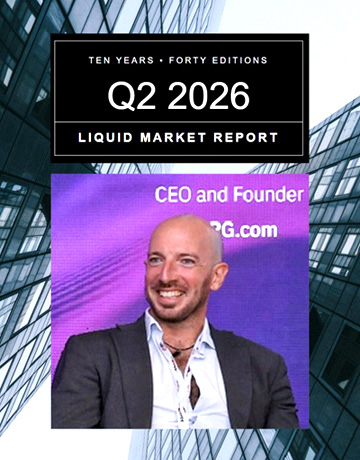
Giuseppe
Graziano, the CEO and Founder of
international domain brokerage and consultancy GGRG.com,
burst onto the international domain scene like a
Roman candle back in 2012 when he entered the
industry as the Director of Business Development -
Europe for the Domain Holdings Group. In the 14
years since then Giuseppe has established himself as one
of the world's top domain brokers with multiple
Escrow.com Master of Domains Awards ( for
ranking among their global Top 10 in sales) to
prove it.
He
has also had high visibility roles as a
speaker and moderator at major conferences,
including this year's Nordic
Domain Days event in Sweden and as a
commentator in many of our annual State of the
Industry reports. However, Giuseppe is
probably most widely known for his quarterly Liquid
Market Report, a publication that just
reached a major milestone of its own.
The latest edition of the Liquid Market Report,
covering the 2nd quarter of 2026, is a
special one because this 40th edition also
marks the 10th anniversary of the publication
- a level of consistency that, coupled with its unique
focus, has made it a highly anticipated
quarterly read among domain investors around the
world.
Unlike other market reports and analysis, the
Liquid Market Report covers an important subset of the
overall aftermarket -short
acronym and numeric domains-
that, due to steady demand, tend to havemore
liquiditythan
most other domain categories. These are.comdomains
comprised of 2-4 letters, 2-5 numbers or acombinationof
2-3 characters mixing letters and numbers. Taken
as whole, that "liquid" universe includes 614,928
.com domains.
To give you an idea of the kind of data the
Liquid Market Report uncovers, here are some of the
highlights from the latest
quarterly edition for 2Q-2026:
*Public
disclosed sales rose 53.01%, reaching $7.82M,
showing a meaningful rebound in reported liquid
domain transactions.
*Escrow.com sales came in at $16.36M, down
35.95%, but still more than double the public market
total, confirming that most liquid domain
activity remains private.
*3L and 4L .coms dominated again across both
channels, with 4L leading escrow volume and 3L close
behind, reinforcing their position as the core of
the liquid market.
*Public sales were highly concentrated, with 3L and
4L .coms making up the bulk of disclosed volume
while most other liquid categories remained
thinly traded.
*2L domains remain the most developed category by
far, with nearly 30% in active use,
continuing to signal deep end-user adoption and
long-term scarcity value.
*2C domains continued to stand out in development
as well, at roughly 18%, placing them surprisingly
close to 3L .coms and ahead of most numeric
categories.
*Over the past 12 months, public equities sharply
outperformed liquid domains, with NASDAQ, SPX,
and GLD all up more than 20%, while 4L .coms
were flat and 5N .coms declined 8%.
If you would like to directly receive the free
quarterly Liquid Domin Reports, you can just
enter your email address on the report
home page.
URLs.com
Contest Offers Chance to Turn Pain from a Lost
Domain Into a Financial Gain
If you
have been in the domain business for any length of
time you probably have painful memories of the
domain that got away. You might has
accidentally let a valuable domain expire or
passed up an opportunity to buy a name that
someone else sold for 100 times more than you
could have imagined. A lot of things can lead to a
valuable name slipping out of your grasp but the
end results is always the some - a wish that
you could get that one back! Odds are that
will never happen but at least you now have a
chance to turn the pain into a monetary gain
thanks to a free new online "Domain That Got
Away" Contest put together by URLs.com
and a group of sponsors who want to help ease your
suffering!
All
they want from domain investors, entrepreneurs and
creators are the stories about how your big domain
fish slipped the hook and swam away. Was it
lost due to expiration, a domain dispute or theft,
failed negotiations, exiting an auction too soon,
or some other star-crossed turn of events?
URLs.com Founder and Broker-in-Chief Jeff
Garbutt noted, “The best domain stories
usually come with a little pain, a little comedy,
and a lesson someone else can use. This
contest gives people a reason to tell those
stories, and maybe get something back from
the one that got away. Entries are limited to one
per person with the most compelling recollections
reaping the rewards.
First
Prize includes $500 in cash + $500 in Spaceship
account credits, a Countersign
one-year team subscription, a DomDB
Tycoon subscription, a URLs.com brokerage
consultation, domain appraisal and discounted
commission and a 30-minute consultation with
attorney Jeff Neuman (JJN
Solutions) who, we can personally
attest, is one of the sharpest, most experienced
people in the entire industry. Second prize
includes a $25 Dynadot
credit and a URLs.om appraisal.
The
contest is open now and entries will be accepted
through September 22, 2026 at at URLs.com/lost-domain-contest/ where
you will find a convenient entry form.
All entries need to follow these guidelines:
be original;
be in English;
be substantially truthful to the best of entrant’s knowledge;
fit the Contest theme;
not contain obscene, defamatory, infringing, fraudulent, deceptive, hateful, or unlawful material;
not violate any third-party right, including copyright, trademark, privacy, publicity, or contractual rights; and
New
One Stop Domain Management Shop DigitalCandy
Arrives With an All-Pro Team of Industry Veterans
Behind the Wheel
The
domain industry continues to be fertile ground
for new enterprises, especially ones that can hit
the ground running because they were built by
seasoned hands who already know the business
inside out. Such is the case with newly launched DigitalCandy.com,
a project that veteran domain attorney and serial
entrepreneur Stevan Lieberman has had in
mind for years now. As one of the busiest
attorneys in the business (since 1996) and
already operating other businesses, including Escrow.Domains,
Stevan waited impatiently but undeterred until two
things happened. AI advances made it
possible to get more done every day and -
most importantly - he found the right people
to help make what he envisioned - a new registrar
and domain management platform - a reality.
The
industry veterans behind DigitalCandy, a
newly
launched one-stop shop designed to meet
every domain owner/investor need.
(L to R): Stevan Leiberman,
Kevin Kopas
and Mike St. John.
They say there is no substitute for
experience and the DigitalCandy team has that in
spades - a situation that gives them an edge not
only in expertise but in the invaluable
relationships they have made throughout the
global industry over the years. As I mentioned,
Stevan has been at it for 30 years now, tech whiz Mike
St. John has been carrying out critical CTO
duties for over 20 years and Kevin Kopas,
even as the "kid" in the group, is known
worldwide after spending 12 years with some
of the best companies in the business in Radix,
Public Interest Registry (.ORG), Short Dot (as
Co-Founder) and now, as Vice President - Domains for
Stevan's venerable law firm, Washington, D.C. based Greenberg
& Lieberman LLC. With a new round of
gTLDs about to open up, Kevin's expertise in
that area adds mightily to the company's arsenal.
Once you know the players behind this
"new" entry in the highly
competitive domain services arena, it is easy
to understand how they are able to provide
such a wide array of services under one roof.
Those include domain registration, sales and
escrow services (with an aftermarket platform
on the road map)and AI-powered
intelligence that Mike noted "doesn't just
search—it thinks so it can provide domain suggestions
based on your intent, instant valuations backed by market
data and portfolio insights.
They've also built Enterprise Controls for teams that manage serious domain portfolios.
Those include role-based access, fine-grained permissions, bulk operations, and a full API for
automation. They also promise Transparent Pricingon all services - no tricks, no upsells, no
inscrutable "processing fees."
While experience is obviously a huge
differentiator for DigitalCandy, Mike St, John
thinks the company's AI tools may be an even
bigger one. Mike told us "You can switch to the
AI mode and ask questions about your portfolio.
For instance, if you have a domain you like but
aren't sure how best to use it - just ask. It will
give you an opinion - like maybe you should develop
it and here are some great ideas for what you
could do with it (especially since AI makes
development a lot easier now). You can ask it for a six-month
ramp-up to profitability if you want. Until you
use it you really won't understand just how good
and how in-depth it gets."
Stevan added, "We've built a full
ecosystem of tools that all talk to each
other, so the AI will work across the board on
all products. Very few people have recently
built a new architecture and new systems, for
a registrar, for a sales platform - and yeah,
there's going to be a sales platform as part of
this. You look at all the big players out there and
they built their software decades ago."
Stevan
Lieberman has been a featured speaker at major
domain conferences for decades.
Here he is providing contract advice at the 2022 NamesCon
Global conference in Austin, Texas.
"There's other types of digital assets
that are out there," Stevan continued,
"and over time we're going to add in those
additional types of digital assets, be it patents,
trademarks, etc. So it's designed for something
that's a bit more expansive than just the domain
industry - and that's the best thing about the
ecosystem is it all crosses over.
Digital Candy can instantly tell you if any of your
domains are likely trademark infringing, so can keep
a cleaner portfolio. Or it can do that on the
registration as well - think twice before
you hit this button kind of thing. That's
usually research you've got to do all on your own.
This is also a tool that can help you sell it
by finding potential buyers. We're also thinking of
adding a few broker pieces in there. Many
people don't know how to move a name. For them why
not get a broker involved who could get it sold for
you?"
In conclusion, Stevan noted what an exciting
timeit has become in our industry with rapid
fire advances coming at us almost every day. "AI
is allowing people to move their companies
forward and their new ideas forward a lot more
quickly than they ever could before," he
noted. "The number of patent searches we've
done has almost doubled just in the last two
years and it's really all due to AI. It's a whole
new world and it never sits still!"
Digital
Asset Investors to Get New Option When Castello
Brothers Add Fractional Domain Ownership to
Smoothie.com Mix July 1st
For
years now, people have been talking about the
possibility of "fractional" domain
ownership that would open the door to
investment in top tier digital assets that would otherwise
be beyond their financial reach. While the
idea has obvious appeal on the surface, it has
also raised a lot of questions, including who
maintains control of the fractionalized asset, who
decides when or if it will be sold to realize
gains, how can shares (in this case, tokens) in
the name be bought and sold?
Well,
we are about to get answers to a lot of those
questions and they will come from a decision
made by two of the most widely-known and respected
veterans of the traditional domain investment
space - The Castello
Brothers - Michael and David
- who founded Castello
Cities Internet Networkin1998
(20 years ago, Michael and David were profiled in
a 2006 DNJournal
Cover Story).
On
Wednesday, July 1, their category-defining
one-word .com domain -Smoothie.com
- will transition to fractionalized ownership
through the the groundbreakingDoma
Protocolfor domain tokenizationdeveloped
by D3
in what will be the first major test of this
ownership model. David Castello noted, "Smoothie.com
is the exact-match category name for the global
smoothie industry, a market valued in the tens
of billions of dollars annually. The domain
has long been recognized as one of the most
valuable and memorable digital brands within the
health, nutrition, beverage, and wellness
sectors."
Michael
Castello & David Castello
The
Castello brothers believe tokenization of premium
domains has the potential to fuel an expansion of
the broader digital asset market - much in the
at that real estate investment trusts (REITs)
transformed access to commercial property ownership.
"The Internet has created immense value over
the last thirty years, but ownership of its most
valuable locations has remained concentrated,”
David said. “This is about opening access to a
new generation of investors who understand that
digital real estate is becoming just as important as
physical real estate.”
The
domain aftermarket has produced some jaw-dropping
sales that underscored the immense value of top tier
domains, including the $70 million sale of
AI.com last year, as well as those of Chat.com ($15
million), Gold.com ($8.5 million),
Rocket.com ($14 million). The Castello
Brothers can point to their own multi-million dollar
sales as well, including Whisky.com at $3.1
million.
Those interested in the Smoothie.com offering and
what it entails can register now, ahead of the July
1 public launch, by visiting the $SMOOTHIE.COM
token listing page on Doma.
As
for the questions posted in the opening paragraph,
to give you more information on what the entire
process of tokenizing a domain involved for the
Castello Brothers - and what investors can expect
from a tokenized domain investment - we are putting
together a deeper dive into this story that will run
later this week.
NamesCon
Global Adds New Perks Ahead of Ticket Price
Increase Friday Night - 2026 Domain Days Dubai
Event Postponed But Plans in Place for Prompt
Return
We have
good news and bad news on the domain conference
front. On the plus side, the 2026 NamesCon
Global conference, coming up November
11 & 12 in Miami, has some welcome
changes in store for attendees. Acting on feedback
from those who attended the landmark 2025
show, NamesCon organizers decided to
make a good thing even better in multiple ways.
Those include making food available on site at the
Ice Palace at no extra charge (food
trucks were the main option last year), onsite
parties so less traveling between venues,
access to a new NamesCon Domain Lounge,
plus additional lounge and meeting spaces that
will make it easier to get face to face business
done. Being in Miami, there are endless options
for activities and fun and NamesCon
is promising some pleasant surprises on that
front as well.
You can
get much
more information here on the networking
opportunities, social activities and special events
they have planned for you, including RightOfTheDot's
Live Digital Asset Auction and the much talked
about Beanstalk
Challenge Grand Finale.
The
main thing you need to know right now is that
ticket prices will be going up Friday night
(June 26) at the stroke of midnight. If you are
planning to go, you can lock
in the lowest rate now - and be sure to
use our DNJ20 code at checkout to knock
20% (nearly $100) off the price!
You
can also now book
discounted rooms at the official show
hotel, the Marriott Biscayne Bay. It didn't
take long for NamesCon's block of room to sell out
last year, so if that's where you want to be, this
is the time to secure your room.
The unfortunate conference
news is the postponement of the 4th annual Domain
Days Dubai conference that was scheduled
to run October 14 & 15, 2026 in the
UAE. That of course, was the
unavoidable result of the current U.S.-Iran
conflict that has made it impossible to
finalize plans for a meeting that attracts
visitors from all over the world. In the three
years DDD has been held, culminating with the 2025
show last October, DDD Founder Munir
Badr and his team have completely wowed
attendees and turned the conference into one
of the most highly anticipated events on
the global calendar.
When
life returns to normal in the region, you can
bet DDD will be back without missing
a step - in fact, with preparations for each
show already a year-around project - I
would bet stronger than ever given some
extra time to prepare. Munir is monitoring the
situation closely and expects to be able to
announce new dates in the not too distant
future.
Inside
the 2026 InterNetX
Domain Summit in Berlin - Big Changes Are
Happening Now But Industry Leaders Had Their
Eyes on Determining What Happens Next
Editor's
Note:
The annual InterNetX Domain Summit that was
held this year in Berlin on June 16 is a
very different kind of event than other meetings
on the industry calendar. Most are multi-day
affairs that anyone can attend and they offer
great value to all who come to network and hear
about the latest industry trends. The InterNetX
Summit is a one-day invitation-only
gathering that also brings together many of the
most forward-thinking leaders
but they come to this event with a focus beyond
the
current
environment,
looking instead to preparing for and shaping
what comes next. To get the best summary of
what happened in Berlin this week, we called on
someone who was in the middle of it and also
happens to be one of the most gifted writers in
the industry - InterNetX's Global Communications
Manager, Simone Catania. This is his
account of what the 2026 InterNetX Domain
Summit was all about:
By Simone
Catania
When we welcomed registrars, registries,
investors and policy voices to Berlin's
Fotografiska on June 16, we weren't
setting out to host just another industry
meetup. We wanted to make a statement about where
our business is heading—and, frankly,
to put a stake in the ground about the
conversations we believe the domain world
needs to be having right now. We gathered
everyone under the banner "Digital
Metamorphosis" and built the day
around a question we can no longer postpone:
what happens to domains when machines, not
people, increasingly do the discovering?
For us, that
question isn't speculative—it's the work.
As domain experts, we see our role as
helping set the agenda for where the domain
industry goes, and the InterNetX Domain
Summit 2026 was the live expression of
that ambition: a room we built around three
words that ran like a current through the
day—Identity. Intelligence. Trust.
Simone
Catania, InterNetX
A
theme built for a turning point
"Digital
Metamorphosis" was more than a tagline for
us. We translated it into a thesis: that AI-driven
search, autonomous agents, decentralized identity,
domain tokenization and trust infrastructure are
collectively redefining what a domain is and
what it's worth. We opened the day by framing
that transformation not as a threat to the
addressable web but as an invitation to lead it—and
we carried that tone all the way through to the
closing remarks.
A
single thread ran through the whole day: as
intelligence and automation reshape the web, domains
matter more than ever as anchors of identity
and trust—exactly the metamorphosis we'd come to
discuss. Different stages and speakers, but one
consistent message: identity, intelligence and
trust are now inseparable from the value of a
domain.
Turning
our vantage point into value
Convening
the conversation is only half of what we do. The same
conviction drives our flagship Global
Domain Report, the data-driven study we
publish each year with Sedo to give the entire
industry a clearer map of where the market is heading.
It's one of several ways we work to turn InterNetX's
vantage point into insight others can act on. Anyone
can describe the metamorphosis; we'd rather help the
industry navigate it.
A
direction, not just takeaways
We
didn't want anyone to leave Berlin with a tidy list of
takeaways and nothing to do with them. The reason we
asked these questions out loud—why domains, why
now—was to give the professionals in the room a
direction. If discovery is shifting from people to
machines, the work ahead is clear: the registrars,
registries and investors who treat domains as identity
and trust infrastructure, not just inventory, are the
ones who will define the next decade. Those who
wait for the metamorphosis to settle will be reacting
to a market others have already shaped.
InterNetX
CEO Elias Rendon Benger speaking at the 2026 Summit in
Berlin June 16.
That's
the future we intend to keep pressing on. The
discussions we opened at the Summit—about agent
discovery, decentralized identity, sovereignty and
trust—aren't a one-day agenda; they're the questions
that will shape our industry for years to come, and we
plan to keep them honest, open and a step ahead.
Berlin wasn't a conclusion. It was a direction—and we'd
rather help set it than wait to be told where domains
go next.
Identity
Digital Releases New Research Centered on Domain
Investors - Who They Are, What They Are Buying and
Why
Identity
Digital®, the administrator of the
world's largest portfolio of top level domains
(nearly 300 TLDs in all), has just released the
results of an iin-depth research project*
(PDF file) on domain
investing and the wide range of buyers who have
turned domain names into a growing
alternative asset class. The ID report found that
"domain investing is particularly popular amongst
millennial investors, ages 30-44, seeking
accessible, digitally native avenues for long-term
growth" and noted "The investment landscape is growing
increasingly competitive, and domain names
have emerged as a differentiated path to value
creation."
According to their research, investors,
regardless of age, look to domain sales data, TLD
performance trends, and portfolio-tracking tools
to guide their decisions, pointing to a broader
demand for more sophisticated analytical
support, adding "Domain investors today
are taking a measured, data-driven approach to
portfolio building, accumulating with purpose,
holding with conviction, and selling when the
moment is right. The numbers tell a story of
patience:
Median portfolio size is approximately 100
domains
66% of investors surveyed purchase fewer than
100 domains annually
82% of investors surveyed sell fewer than 50
domains annually
74% of investors surveyed hold domains for at
least one year
Matt Overman, Chief Revenue Officer at
Identity Digital, said “The modern internet
is offering new ways for domain investors to
track consumer behavior and potential
opportunities. Next-generation domain
extensions are starting to attract investor
attention, as creators, brands, and AI
continue to reshape the weband elevate
the importance of identity, trust, and
authenticity.”
"Investor interest is increasingly shaped
by industries and trends they believe will
drive demand, including extensions tied to
emerging technologies. The AI boom is
fueling particularly strong interest in .ai
domains, which have a 69% net-positive
investor sentiment score, while .io
domains reached 64%."
The research also reveals who is
investing. Millennial-aged investors now
represent the largest segment at 66%, with 49%
working in tech or related fields and 66%
maintaining full- or part-time careers outside
of domain investing. Recent
market data reinforces the trend
with alternative assets accounting for up
to 20% of millennials’ portfolios,
nearly double the share held by Gen X
and triple that of baby boomers.
Matt
Overman
CRO, Identity Digital
The ID research also highlights the expanding
influence registries and registrars have on
investor behavior. When selecting a registrar,
investors’ top priorities are low domain renewal
fees, ease of portfolio management, and
accessibility of support teams. Registry marketing was found to play a
meaningful role as well. Notably, 67% of
investors surveyed say registry operators directly
impact their investment decisions, and 69%
say they are more likely to invest in a TLD when
they see active registry marketing, underscoring the
role that platform and promotional support play in
shaping where capital flows.
*Research Methodology
Research findings are based on a two-phase study
conducted in 2025 by Identity Digital, combining
qualitative interviews with domain industry experts
and a quantitative survey of 100+ domain investors. Identity
Digital regularly publishes research and analysis on
emerging domain trends, including insights on new
top-level domain (nTLD) adoption, on its newsroom.
Why
Bargain Hunters Are Beating a Path to Mike
Sullivan's New NotRenewing.com Sales Platform for Expiring
Domains
In our
last post (about Notify.Domains)
we told you about a new platform that can help you
acquire specific domains, as well help you protect
the ones you already have. Today, on the flip side
of that coin, we want to let you know about
another new service that can help you get some
money back
on domainsyoudon't want any
more.
Like
Michael Cyger's Notify.Domains, NotRenewing.com
comes from an industry veteran - in this case, Mike Sullivan,
who, like Cyger, was looking for a solution to a
problem that has vexed practically all
professional domain investors since the business
began. That is how to take some of the pain out of
dropping domains you've given up on selling. When
they go they take most, if not all, of the
money you invested down the drain with
them.
Mike,
who has been writing a popular domain industry blog - Sullys
Blog - since 1997 (30 years as
of next January), finally had enough and came up
with the idea for NotRenewing.com
Mike
Sullivan
Founder, NotRenewing.com
that
just
launched in March. It is a fixed-price sales
platform for expiring domains. To keep
things simple every name is priced buy it now at $99.
I'm no mathematician but that looks way better
than $0 to me. The best part for sellers is
it costs nothing to list up to 25 domains and
if any do sell, you get $90 for each one. The
only rule for standard listings is that the domain
has to be at least 24 months old and expiring within
12 months. There are also very affordable premium plans
that allow you to list younger names and far more
domains than the free level.
So,
who is going to want domains that even you
don't think is worth the renewal fee? You know what
they say - one man's trash is another man's
treasure and NotRenewing,com already has a lot
of sales to prove it (dozens have sold this week
alone and some examples of recent sales are in the
screenshot below).
Had I seen that SpiceOdyssey.com listing at
$99, I would have bought it immediately myself (I
see it has now been relisted for $3,999
elsewhere). Given
how much investors love to scan expiring domain
lists, NotRenewing.com will attract a steady stream
of bargain hunters, especially since the platform
gives you a shot at
picking up reasonably priced names before
they end up in the expired auction stream where a lot
more competitors will see them. It's a win-win proposition
for buyers and sellers alike.
The
site currently supports 17 TLDs: .com, .net,
.org, .io, .ai, .co, .dev, .app, .xyz, .me, .cc, .tv,
.info, .biz, .us, .gg, and .sh. You can check out
the full Frequently Asked Questions page here.
Michael
Cyger's New Notify.Domains Service Aims to Help
Move Investors to the Head of the Acquisition Line
Many of
the most valuable resources domain investors count
on daily were originally built by someone who was an
investor themselves - someone who needed
a solution that existing tools weren't
giving them. One of the
most successful of them all, Frank Schilling,
often said he built Uniregistry just to manage
his own legendary portfolio. What he envisioned
turned out so well he later opened it to everyone.
His registrar and marketplace met the needs of others
so well it exploded in popularity, so much so that
GoDaddy ended up buying the company in a
nine-figure deal.
The
latest example of that "if you want something
done right, do it yourself" mentality comes
from Michael
Cyger, who has already founded
and sold his last two companies, Domain Academy
(a great domain education platform that, like
Uniregistry, went to GoDaddy) and the
popular domain media site, DomainSherpa,
that was acquired by MediaOptions and continues to
thrive.
Now
Michael, with more time to concentrate on
investing since his last exit, has come across and
decided to fix another pain point that
was
Michael
Cyger
annoying
him to no end. The tool he created in that passion
project solved his problem so well, he, like Frank,
decided it was too good to keep to himself,
resulting in the recent launch of Notify.domains.
"A
domain I'd been watching for years sold for a tiny
fraction of what it was worth because the owner
didn't know what they had, and I found out after it
was gone," Michael said. "Another just
quietly dropped and was registered before I ever
saw it. I built Notify.domains so it never
happens to me again and thought others would
like to have the same edge." To achieve that
Notify.domains continually monitors at least a half
dozen key areas for the first sign a domain is, or is
about to become available, including website signals
(including prolonged downtime or expired SSL
certificates, that can signal business struggles),
WHOIS and RDAP shifts, backorders, auctions, and
aftermarkets.
Veteran
investor Adam Strong wrote a testimonial for
Notify.domains about a situation that meant a
lot more to him than the dollar value of a
particular domain. Adam noted, “I've tracked
hundreds of domains and it's a super
tedious job and it's easy to miss something. For
the 17 years since my son was born, I tried
unsuccessfully to get his name. Within days of
signing up with Notify.domains, the service
alerted me the domain name was in auction
and I secured it. Notify.domains does the job
better than you can. Easy peasy.”
I
can personally relate to that. Many years ago
I wanted ronjackson.com to use as a permanent
lifetime email address. It was owned by
someone else with the same name but they
repeatedly rejected my offers to buy it. Notify.domains
didn't exist back then so I manually kept
checking on the domain for five years before
it suddenly turned up in an expired name
auction and, like Adam, I was able to get
the domain, but could have so easily missed it
had I not been looking at auction lists on
that particular day.
In
addition to being able to help you get early access
to domains you are interested in, Notify.domains
can help you protect what you already have by
keeping a constant eye on your own domains, so you
will find out right away if any changes have been
made to them that you did not authorize. At current
settings, Notify.domains checks each watched domain
25+ times per day.
The
service comes with many additional
free tools including WHOIS and RDAP
data, DNS. email record checkers (SPF, DKIM, DMARC),
blacklists and domain renewal cost checkers
(especially useful now that many TLDs charge premium
prices not just for an initial registration but for
renewals too). The cost for the basic service starts
at $2 per domain monthly ($24 yearly) with volume
discounts up to 45% off starting at 250+ domains and
custom enterprise pricing for 500+. To check
out all of the details or test drive the service
yourself, visit Notify.domains
where you can see a demo or take advantage of their free 7-day trial offer.
If you've
been out of the loop lately, catch up in the Lowdown
Archive!
We
need your help to keep giving domainers The
Lowdown, so please email [email protected]with any interesting information you might have. If
possible, include the source of your information so we can
check it out (for example a URL if you read it in a forum
or on a site elsewhere).